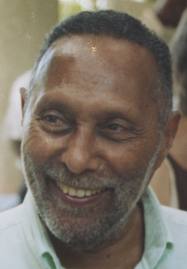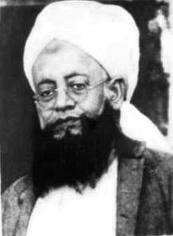
Composite Nationalism: Shaykh Husain Ahmad Madani

Shaykh Husain Ahmad Madani (1879-1957) “may well have had made the most influential and significant intervention in religious thought of any Islamic scholar of twentieth century India…The importance of his writings lies in the fact that he laid down in uncompromising terms, the Islamic sanction for Muslims to live with non-Muslims in a shared polity and specifically, to embrace the secular democracy of a state like India (Metcalf: 2005: 23-24).

Shaykh Madani states: “The Prophet Muhammad, Allah bless him and give him peace, in the fourteenth year of his prophethood, formed a united front between the Companions and the resident Jews of Medinah based on a written constitution that brought them together as one nation against their common enemy. Continue reading →

Shaykh Anwar Shah’s Presidential Address (1927)

Maulana Anwar Shah Kashmiri (1875-1933), a native of Kashmir, was a leading Islamic scholar and taught in the Darul-’Uloom at Deoband, India’s premier Islamic madrasa. Among the many Muslims who crusaded for the country’s independence from the British and called for an India where people of all communities could live together in peace and harmony and justice were numerous Deobandi ulama. Their leading role in the freedom struggle and in the effort to form a united front of all religious communities for a new India have, sadly, been largely forgotten. It is crucial that such voices be retrieved and an important part of Indian history—the heroic role of many Muslim leaders in the movement for free India—be brought before the general public.This translation of certain sections of a lecture of historical importance by Maulana Anwar Shah Kashmiri is a small effort in this regard.This lecture was delivered by Maulana Anwar Shah Kashmiri as a presidential address to the 1927 Peshawar meeting of the Jamiat ul-Ulama-i Hind. The lecture, recently published in Urdu by the Jammu and Kashmir Islamic Research Centre (Kokerbagh Dak Khana, Nowshehra, Srinagar, Kashmir) runs into over a hundred pages in the original Urdu. The Presidential Address of Hazrat Allama Anwar Shah Kashmiri to the Annual Session of the Jamiat ul-Ulama-i Hind, Peshawar, 1927. Continue reading →

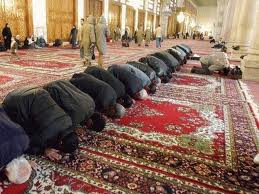
Shah Waliullah: The Benefits of Congregational Prayer

“To save the people from fatal effects that their own customs and rituals can bring them, there is nothing more useful than to make one of the religious services so common a custom and so public a ritual that it may be performed open before everybody by any person; whether he be learned or illiterate. Townfolk and countrymen should both be equally anxious to observe it. It should become a subject of rivalry and pride among all of them, and it should be so universally practised that it becomes a part and parcel of their social setup, so much so that life without it maybe worthless for them. If this is achieved, it will help in establishing the worship and obedience of Allah and will form a very useful substitute for those rituals and customs which could cause them serious harm. Since ritual Prayer is the only religious observance that surpasses all others in importance and universality, attested by both reason and scripture, it becomes therefore absolutely necessary to get it established universally by propagating it and by arranging special congregations. Continue reading →

Stuart Hall: Has Multiculturalism Failed?

The Prime Minister recently criticised what he called ‘state multiculturalism’ and said it had failed, arguing that Britain needs a stronger national identity. Is it time to turn our backs on the multi-cultural idea? And what would a stronger national identity mean to people who feel at the cultural margins of our society? As the politicians debate, Laurie Taylor speaks to Britain’s leading cultural theorist, Stuart Hall. They discuss culture, politics, race and nation in a special edition of Thinking Allowed. 

Robert Fisk: The destiny of this pageant lies in the Kingdom of Oil

The Middle East earthquake of the past five weeks has been the most tumultuous, shattering, mind-numbing experience in the history of the region since the fall of the Ottoman empire. For once, “shock and awe” was the right description.
The docile, supine, unregenerative, cringing Arabs of Orientalism have transformed themselves into fighters for the freedom, liberty and dignity which we Westerners have always assumed it was our unique role to play in the world. One after another, our satraps are falling, and the people we paid them to control are making their own history – our right to meddle in their affairs (which we will, of course, continue to exercise) has been diminished for ever.

‘I’m A Muslim, but I’m Not a Terrorist’: Segregation vs Integration

Integration as social policy in the UK has fallen short of delivering anything but inequality and injustice. Rather, in its use since 9/11 it has become a convenient banner under which it is justifiable and convenient to target and discipline British Muslims. This was clearly demonstrated by David Cameron’s recent speech on the ‘failure of multiculturalism’, categorically singling out Muslims as most in need of integration into British values. The contemporary debate has reduced all social issues to questions of cultural differences and conflicting value systems. Public voices in the media have now made it fashionable and respectable to possess anti-Muslim sentiments.  Continue reading →

Sunnah: The Prophetic Paradigm

In this study, we shall begin by defining the terms ‘hadith’ and ‘Sunnah’ and the position they occupy in Islam. Subsequently, we shall state the arguments against the authenticity of hadith and present our conclusions.

Hadith

Hadith, linguistically is speech/news/information. Technically, it is the sayings, actions, tacit approvals, character and circumstances of the Prophet Muhammad, Allah bless him and give him peace, his Companions [ṣaḥābah] and Followers [tāb‘īn] [S. Usmani 2003:2, Dihlawi 1368 A.H.:1, Lucknowī 1997:32-33]. It includes all narrations about the Prophet’s birth, physical appearance, and the statements, actions and silent approvals of the latter two. Continue reading →

The Fundamentals of Language: Parental Pedagogy

Parents have a responsibility to ensure that their children get the best education possible. Fundamental amongst the preliminaries of education is language.  Language is the basis of all communication and doing it correctly requires training. Therefore, talking to the child in proper meaningful sentences is the first step. Similarly, reading books out loud to your child helps building language skills, even before the child can speak. When you go about you daily chores, explain what your doing to him/her e.g. ‘I’m now chopping the onions’, ‘I’m going to the cereals aisle to buy some Corn Flakes’. Encourage the child to speak by asking questions ‘What am I doing now?‘, ‘What do I need to bake a cake?’ etc.

Continue reading →

Mortimer Adler on How to Read a Book

Mortimer Adler is one of my favourite twentieth century philosophers. My encounter with his writings began with his best selling ‘How to Read a Book’ first published in 1940. Since then, (not in 1940) I have collected any book of his that I can get my hands on. My annual trip to Haye-on-Wye has Mortimer Adler on the top of my book list and many others are in my Amazon wish list. I wrote the following as a handout for a class I gave on ‘How to Read a Book’ and I reproduce it here for the benefit of all. Continue reading →