
Darkness is needed for a good night’s sleep. And the more darkness, the better. If you are having trouble sleeping and your bedroom is not totally dark when you try to sleep, you should take steps to eliminate or, at least, reduce the light.
Darkness is needed for a good night’s sleep. And the more darkness, the better. If you are having trouble sleeping and your bedroom is not totally dark when you try to sleep, you should take steps to eliminate or, at least, reduce the light.

Jerry Mander is founder and distinguished fellow of the International Forum on Globalization, and was called “patriarch of the anti-globalization movement” by the New York Times. His early career was as president of a commercial ad agency, and then later, non-profit political advertising with Public Media Center, which concentrated on environmental and anti-war work. His previous books include Four Arguments for the Elimination of Television (1978), In the Absence of the Sacred (1991), The Case Against the Global Economy (1996), and Alternatives to Economic Globalization (2002). This article is reprinted from Chapter 10 of his new book, The Capitalism Papers: Fatal Flaws of an Obsolete System (Copyright © 2012 by Jerry Mander).
Is advertising legal? Most people agree that it is an uninvited intrusion into our lives and our minds, an invasion of privacy. But the fact that we can be aware of this without being furious, and that we do little to change the situation, is a good measure of our level of submission. There is a power relationship in advertising that is rarely, if ever, looked at, and yet it is a profoundly corrupt one. Some speak; others listen.
A. J. Liebling famously said, “Freedom of the press is guaranteed, but only if you own one.” Freedom of speech is also guaranteed. But only if you have a few million dollars for an effective media strategy. Soapbox oratory doesn’t sway the public anymore. But the powers of advertising go well beyond the amount of money spent. The true power is in the nature of moving-image media, projected for hours every day into human brains. It’s a form of intrusion we have never before in history had to face. Even now in the Internet age, the powers of television and advertising are undiminished and insufficiently examined or discussed.

The German sociologist, Ulrich Beck, has made key contributions to ideas of how to understand the global in recent times.
His understanding of cosmopolitanism is rooted in how current academic discourse is concerned with theorising about the organisation and reconstruction of social and cultural life within a global framework. Technological advances through cyber communication, economic interdependency, global media coverage, political cooperation and the rise of multiculturalism draw attention to an underlying feature of contemporary times eloquently summed up by Asad as the ‘conquest of space’ (Asad 1982: 13); highlighting the interconnectedness between societies, where the local becomes global and the global local (Beck 2002). Coupled with the post 9/11 perceived ‘threat’ of terrorist attacks and the environmental risk factors (Beck 2010) this ‘conquest of space’ calls for a communal (understood globally) and cooperative response. Cosmopolitanism[1] is thus a rethinking of how society, and, by extension, individuals are understood to enable an exploration of the effects these changes bring and to facilitate a well-informed and well-deliberated response. Continue reading →

Abdur Rahmān ibn al-Jawzī was born in 508 A.H. He was a profound scholar, orator and a prolific writer in tafsīr, hadith, history, and literary criticism. My first encounter with his writings was when I studied the Arabic anthology entitled Mukhtārāt min Adab al-‘Arab. Below is a translation of that very same passage taken from Ibn al-Jawzi’s book entitled Ṣayd al-Khātir.
May Allah grant us all the ability to achieve our optimum potential.
Shazad Khan Continue reading →
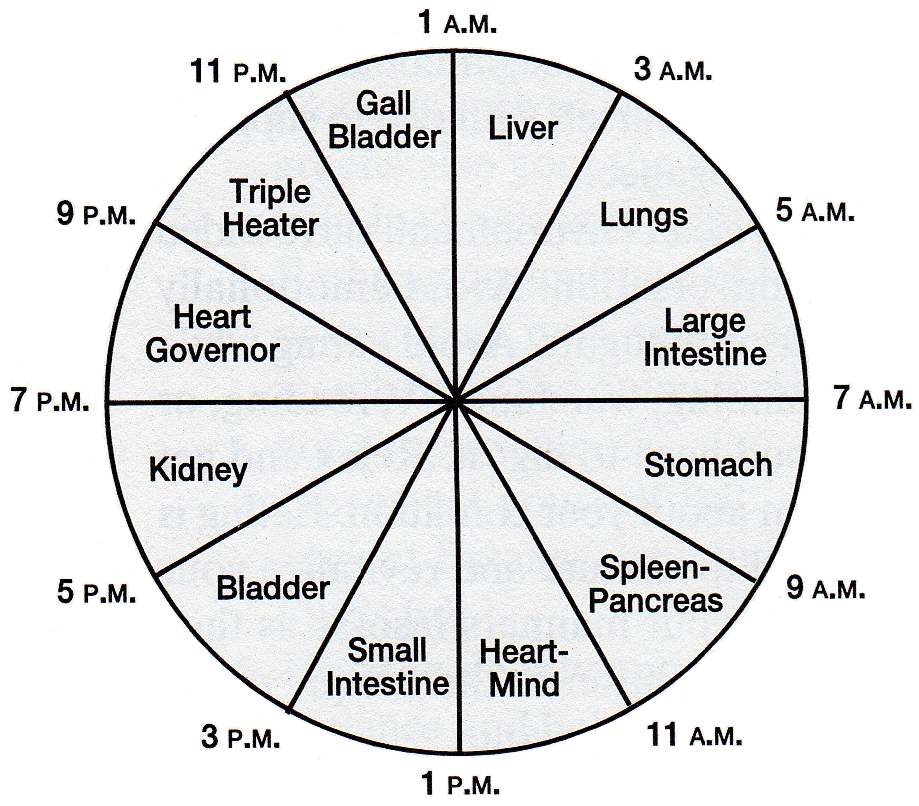 “In order to arrive at a health-promoting eating schedule, one may want to take into account important physiological factors.
The night and early morning hours before approximately five a.m. are passive times of the day when the digestive organs need to rest. The liver in particular needs to complete numerous subtle metabolic functions unhampered by the early stages of digestive activity. One of these functions is blood purification, which is interrupted and altered when late meals are eaten. According to the “Chinese clock,” the most active time for the liver is between one and three a.m.
The Chinese clock is an ancient observation that the body’s internal organs have peak activity during two-hour intervals. This theory also suggests that an organ’s minimum activity is twelve hours away from its peak interval. For example, the peak activity of the stomach is from seven to nine a.m., and its minimum activity is twelve hours later from seven to nine p.m. Continue reading →
 What if Islam had never existed? To some, it’s a comforting thought: No clash of civilizations, no holy wars, no terrorists. Would Christianity have taken over the world? Would the Middle East be a peaceful beacon of democracy? Would 9/11 have happened? In fact, remove Islam from the path of history, and the world ends up exactly where it is today. Continue reading →
Excerpted from chapter one of Rethinking Secularism (Oxford University Press, 2011).
 We live in a world in which ideas, institutions, artistic styles, and formulas for production and living circulate among societies and civilizations that are very different in their historical roots and traditional forms. Parliamentary democracy spread outward from England, among other countries, to India; likewise, the practice of nonviolent civil disobedience spread from its origins in the struggle for Indian independence to many other places, including the United States with Martin Luther King Jr. and the civil rights movement, Manila in 1983, and the Velvet and Orange Revolutions of our time.
But these ideas and forms of practice don’t just change place as solid blocks; they are modified, reinterpreted, given new meanings, in each transfer. This can lead to tremendous confusion when we try to follow these shifts and understand them. One such confusion comes from taking a word itself too seriously; the name may be the same, but the reality will often be different.
This is evident in the case of the word “secular.” We think of “secularization” as a selfsame process that can occur anywhere (and, according to some people, is occurring everywhere). And we think of secularist regimes as an option for any country, whether or not they are actually adopted. And certainly, these words crop up everywhere. But do they really mean the same thing in each iteration? Are there not, rather, subtle differences, which can bedevil cross-cultural discussions of these matters? Continue reading →
 “Dates are cheap to produce and preserve, and are also very rich in nutrition. Dates contain a high percentage of carbohydrate, fat comprising 14 types of fatty acids, 15 salts and minerals, protein with 23 different amino acids, six vitamins and a high percentage of dietary fibre. Continue reading →

 The recent riots that took the whole of the UK by surprise was not simply a race riot. Yes, Duggan was black and there are strong correlations between race and class but skin colour had nothing to do with the looting. Some of the worst violence happened in majority-white-neighbourhoods like Croydon. There is something deeper that caused this havoc and it includes all groups: black, white and brown. Continue reading →
 Micropaedia