 What if Islam had never existed? To some, it’s a comforting thought: No clash of civilizations, no holy wars, no terrorists. Would Christianity have taken over the world? Would the Middle East be a peaceful beacon of democracy? Would 9/11 have happened? In fact, remove Islam from the path of history, and the world ends up exactly where it is today. Continue reading →
Category / Current Affairs
Rethinking Secularism
Excerpted from chapter one of Rethinking Secularism (Oxford University Press, 2011).
 We live in a world in which ideas, institutions, artistic styles, and formulas for production and living circulate among societies and civilizations that are very different in their historical roots and traditional forms. Parliamentary democracy spread outward from England, among other countries, to India; likewise, the practice of nonviolent civil disobedience spread from its origins in the struggle for Indian independence to many other places, including the United States with Martin Luther King Jr. and the civil rights movement, Manila in 1983, and the Velvet and Orange Revolutions of our time.
But these ideas and forms of practice don’t just change place as solid blocks; they are modified, reinterpreted, given new meanings, in each transfer. This can lead to tremendous confusion when we try to follow these shifts and understand them. One such confusion comes from taking a word itself too seriously; the name may be the same, but the reality will often be different.
This is evident in the case of the word “secular.” We think of “secularization” as a selfsame process that can occur anywhere (and, according to some people, is occurring everywhere). And we think of secularist regimes as an option for any country, whether or not they are actually adopted. And certainly, these words crop up everywhere. But do they really mean the same thing in each iteration? Are there not, rather, subtle differences, which can bedevil cross-cultural discussions of these matters? Continue reading →
UK Riots: The Need for Religion
 The recent riots that took the whole of the UK by surprise was not simply a race riot. Yes, Duggan was black and there are strong correlations between race and class but skin colour had nothing to do with the looting. Some of the worst violence happened in majority-white-neighbourhoods like Croydon. There is something deeper that caused this havoc and it includes all groups: black, white and brown. Continue reading →
Composite Nationalism: Shaykh Husain Ahmad Madani
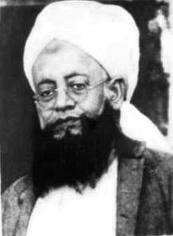 Shaykh Husain Ahmad Madani (1879-1957) “may well have had made the most influential and significant intervention in religious thought of any Islamic scholar of twentieth century India…The importance of his writings lies in the fact that he laid down in uncompromising terms, the Islamic sanction for Muslims to live with non-Muslims in a shared polity and specifically, to embrace the secular democracy of a state like India (Metcalf: 2005: 23-24).
Shaykh Madani states: “The Prophet Muhammad, Allah bless him and give him peace, in the fourteenth year of his prophethood, formed a united front between the Companions and the resident Jews of Medinah based on a written constitution that brought them together as one nation against their common enemy. Continue reading →
Shaykh Anwar Shah’s Presidential Address (1927)
 Maulana Anwar Shah Kashmiri (1875-1933), a native of Kashmir, was a leading Islamic scholar and taught in the Darul-’Uloom at Deoband, India’s premier Islamic madrasa. Among the many Muslims who crusaded for the country’s independence from the British and called for an India where people of all communities could live together in peace and harmony and justice were numerous Deobandi ulama. Their leading role in the freedom struggle and in the effort to form a united front of all religious communities for a new India have, sadly, been largely forgotten. It is crucial that such voices be retrieved and an important part of Indian history—the heroic role of many Muslim leaders in the movement for free India—be brought before the general public.This translation of certain sections of a lecture of historical importance by Maulana Anwar Shah Kashmiri is a small effort in this regard.This lecture was delivered by Maulana Anwar Shah Kashmiri as a presidential address to the 1927 Peshawar meeting of the Jamiat ul-Ulama-i Hind. The lecture, recently published in Urdu by the Jammu and Kashmir Islamic Research Centre (Kokerbagh Dak Khana, Nowshehra, Srinagar, Kashmir) runs into over a hundred pages in the original Urdu. The Presidential Address of Hazrat Allama Anwar Shah Kashmiri to the Annual Session of the Jamiat ul-Ulama-i Hind, Peshawar, 1927. Continue reading →
Stuart Hall: Has Multiculturalism Failed?
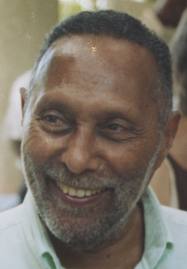 The Prime Minister recently criticised what he called ‘state multiculturalism’ and said it had failed, arguing that Britain needs a stronger national identity. Is it time to turn our backs on the multi-cultural idea? And what would a stronger national identity mean to people who feel at the cultural margins of our society? As the politicians debate, Laurie Taylor speaks to Britain’s leading cultural theorist, Stuart Hall. They discuss culture, politics, race and nation in a special edition of Thinking Allowed.
Robert Fisk: The destiny of this pageant lies in the Kingdom of Oil
 The Middle East earthquake of the past five weeks has been the most tumultuous, shattering, mind-numbing experience in the history of the region since the fall of the Ottoman empire. For once, “shock and awe” was the right description.
The docile, supine, unregenerative, cringing Arabs of Orientalism have transformed themselves into fighters for the freedom, liberty and dignity which we Westerners have always assumed it was our unique role to play in the world. One after another, our satraps are falling, and the people we paid them to control are making their own history – our right to meddle in their affairs (which we will, of course, continue to exercise) has been diminished for ever.
‘I’m A Muslim, but I’m Not a Terrorist’: Segregation vs Integration

Integration as social policy in the UK has fallen short of delivering anything but inequality and injustice. Rather, in its use since 9/11 it has become a convenient banner under which it is justifiable and convenient to target and discipline British Muslims. This was clearly demonstrated by David Cameron’s recent speech on the ‘failure of multiculturalism’, categorically singling out Muslims as most in need of integration into British values. The contemporary debate has reduced all social issues to questions of cultural differences and conflicting value systems. Public voices in the media have now made it fashionable and respectable to possess anti-Muslim sentiments. Continue reading →
What is al-Qaeda?
 Jason Burke (2004), who is a journalist for the Observer, has spent more than a decade reporting in the Middle East South East Asia, and draws the conclusion that seeing al-Qaeda as a single international organisation is an over simplification of the ‘war on terror’.
 Micropaedia